
Moving to Costa Rica: A Practical Guide
Connect the decisions about your destination, household, documentation and arrival before you start booking your move.
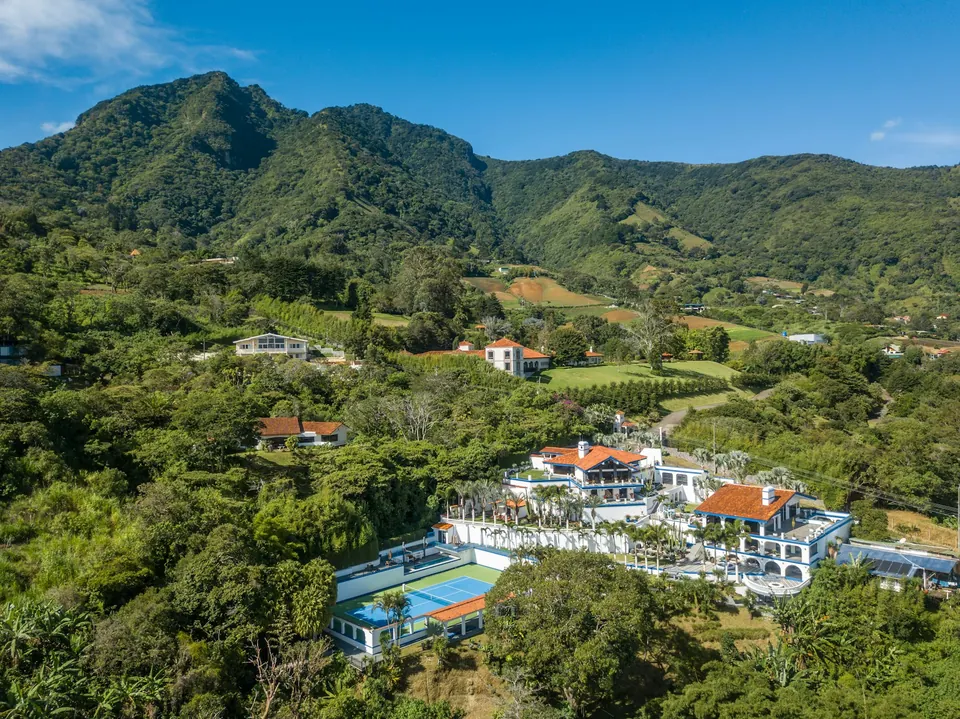
Moving to Costa Rica successfully requires coordinating four core milestones: (1) Residency category qualification (Pensionado at $1,000/mo, Rentista at $2,500/mo, Inversionista at $150,000, or Digital Nomad); (2) Door-to-door container shipping with verified export packing arriving at Puerto Caldera or Puerto Limón; (3) Customs duty exemption filing under Law 9996 to bring household belongings and vehicles duty-free; and (4) Destination onboarding including Caja (CCSS) public/private healthcare registration, banking setup, and local settling-in.
Source: Costa Rica Immigration Directorate (DGME) & Customs Law (Ley 9996).1. Why Relocate to Costa Rica?
Costa Rica has consistently ranked among the world’s most desirable international relocation destinations for citizens of the United States, Canada, the United Kingdom, and Europe. Known for its Pura Vida philosophy, the country offers a rare blend of stable democratic governance, extraordinary biological diversity, peaceful living (having abolished its army in 1948), and a temperate tropical climate.
Unlike many regional neighbors, Costa Rica features a highly developed private medical infrastructure, strong international air connectivity from San José (SJO) and Liberia (LIR), high-speed fiber-optic internet across both urban and coastal hubs, and favorable tax incentives for foreign retirees, investors, and remote professionals.
2. Who Moves to Costa Rica?
The demographic profile of international movers to Costa Rica has evolved significantly over the past decade:
- North American Retirees (Pensionados): Attracted by affordable living, year-round warm weather, and JCI-accredited healthcare in the Central Valley (Escazú, Santa Ana, Atenas).
- Digital Nomads & Tech Professionals: Working remotely under the 2022 Digital Nomad Law, allowing tax-free foreign earnings and visa stays up to two years.
- Expat Families with School-Age Children: Choosing Costa Rica for bilingual, US-accredited, and International Baccalaureate (IB) private schools in the Central Valley and coastal Guanacaste.
- Real Estate Investors & Second-Home Owners: Purchasing villas, beachfront homes, and eco-lodges under the reduced $150,000 USD investment threshold of Law 9996.
3. Residency & Immigration Pathways
Securing legal residency is a fundamental prerequisite for long-term living and claiming valuable customs duty exemptions on imported household goods and vehicles.
| Category | Financial Requirement | Work Rights in CR | Key Benefits |
|---|---|---|---|
| Pensionado Retiree Visa |
$1,000 USD/month guaranteed lifetime pension / Social Security | Cannot work as local employee; can own a business | Eligible for Law 9996 duty-free household container and up to 2 vehicles. |
| Rentista Independent Income |
$2,500 USD/month guaranteed for 2 years ($60,000 bank deposit) | Cannot work as local employee; can own business | Covers spouse and dependent children under 25. Law 9996 tax benefits. |
| Inversionista Investor Visa |
$150,000 USD minimum investment in real estate, project, or business | Can manage and receive income from investment | Reduced threshold under Law 9996. Duty-free household goods and 2 vehicles. |
| Digital Nomad Remote Worker |
$3,000 USD/mo (single) or $4,000 USD/mo (with family) foreign income | Remote foreign work only | Exempt from Costa Rican income tax and local import duties on work equipment. |
Note: Residency requirements and filing procedures are subject to current DGME rules; see our Residency & Immigration Services for the relocation process and document timeline.
4. International Moving & Container Logistics
Transporting your personal effects safely requires selecting the right maritime transit model:
Full Container Load (FCL)
Best for: 2-4+ bedroom homes. Exclusive container sealed at your home and opened only at the destination warehouse or customs depot.
- • 20ft Container: ~1,150 cubic feet (~2-3 bedrooms)
- • 40ft High Cube: ~2,600 cubic feet (~4+ bedrooms or car + furniture)
- • Transit: 10-25 days on water
Less than Container Load (LCL / Shared)
Best for: Studios, partial moves, or boxes only (100 to 500 cubic feet). Items are crated and consolidated into a shared ocean container.
- • Cost-effective for smaller volumes
- • Professional wooden lift-van crating
- • Slight transit buffer for consolidation/deconsolidation
Learn more in our dedicated guide: International Moving & Container Shipping to Costa Rica →
5. Customs & Law 9996 Duty Exemptions
Costa Rica's customs system (Servicio Nacional de Aduanas) classifies imported household effects under strict tariff codes. Standard household shipments without residency status are taxed based on assessed CIF value (Cost, Insurance, and Freight), with average tariffs ranging from 30% to 50%+.
However, under Law 9996, qualifying approved applicants under Pensionado, Rentista, or Inversionista categories are granted:
- ✓ 100% Import Tax Exemption on all household furnishings, kitchenware, appliances, and personal effects.
- ✓ Import Tax Exemption for up to Two Motor Vehicles (for personal or family transport).
- ✓ 20% Exemption on Property Transfer Taxes for qualifying property purchases.
Our customs clearance desk manages the electronic DUA process at Puerto Caldera and Puerto Limón, including import documentation, applicable exemptions, port requirements, and release for delivery. Read our Costa Rica Customs Clearance & Importation Guide →
6. Importing Vehicles & Pets
Vehicle Relocation
Importing a vehicle involves shipping (either Roll-on/Roll-off or inside a 40ft container), paying or exempting import duties, clearing customs, completing the technical safety inspection (Dekra), and receiving Costa Rican license plates and the annual road permit (Marchamo). High ground clearance (4WD / AWD) is highly recommended for Costa Rica’s mountainous terrain and coastal roads. Check our Vehicle Relocation Guide →
Pet Relocation
Costa Rica is welcoming to companion animals, with no quarantine requirements if health protocols are strictly respected:
- • Rabies vaccination certificate issued at least 30 days prior to travel.
- • Comprehensive health certificate issued by an accredited veterinarian within 14 days of departure.
- • Endorsement by USDA-APHIS (for US departures) or CFIA (for Canadian departures).
- • Internal and external parasite treatment administered within 15 days of travel.
Read the complete protocol: Moving to Costa Rica with Pets →
7. Healthcare in Costa Rica: Public (Caja) vs Private
Costa Rica's healthcare system is universally recognized as one of the best in Latin America. It operates on a dual-track model:
| Feature | Public System (CCSS / "Caja") | Private System (INS, BlueCross, CIMA, Bíblica) |
|---|---|---|
| Access & Eligibility | Mandatory enrollment for all approved legal residents. | Available to anyone via private insurance or out-of-pocket cash pay. |
| Cost Structure | Monthly premium based on reported income (approx. 7% to 11%). | Insurance policies range $100 to $350+/mo per adult; out-of-pocket ~70% lower than US. |
| Wait Times | Longer waits for elective procedures and specialized consultations. | Immediate appointments; same-day or next-day diagnostic imaging. |
| Language & Facilities | Spanish-speaking doctors; comprehensive clinic coverage (EBAIS). | Bilingual, US/European-trained specialists in world-class JCI hospitals. |
8. Housing Considerations, Schools & Banking
Housing Strategy: We strongly advise clients to rent for 6 to 12 months before purchasing property. This allows you to experience the dry and green (rainy) seasons in your chosen microclimate, understand neighborhood dynamics, and test daily commutes.
International Schools: Families moving with children have exceptional educational choices in the Central Valley, including the American International School (AIS), Country Day School, Pan-American School, and Lincoln School, offering US diplomas and International Baccalaureate (IB) certifications. In Guanacaste, CRIA (Costa Rica International Academy) and Journey School provide accredited options.
Banking: Opening a Costa Rican bank account (BAC Credomatic, Banco Nacional, Banco de Costa Rica) requires residency status or proof of investment/property escrow. Until residency is finalized, foreign credit cards and wire transfers can be utilized smoothly.
9. The 12-Month Moving Checklist
Exploration & Document Prep
Take an exploratory trip. Order police background records, marriage, and birth certificates. Prepare documents for State/Federal apostille.
Inventory & Moving Consultation
Conduct an international shipping video survey. Decide what to sell vs what to ship. Finalize residency documentation and formal filing milestones.
Container Booking & Health Prep
Lock ocean freight booking dates. Finalize pet vaccination schedules. Obtain USDA/CFIA endorsement forms. Secure temporary housing in CR.
Origin Packing & Customs Coordination
Origin export packing and container loading. Flight arrival in Costa Rica (passport stamp required for customs). Caldera/Limón clearance and delivery.
10. Common Relocation Mistakes to Avoid
- ❌ Shipping Before Understanding Duty Rules: Sending a container without residency paperwork or an experienced customs broker often results in unexpected 35%+ import duties.
- ❌ Expired Police Records: Costa Rican immigration requires criminal background records to be issued within 6 months of submission; order them at the correct time in the sequence.
- ❌ Buying Real Estate Immediately: Microclimates in Costa Rica vary dramatically across just 15 miles. Renting first protects your lifestyle and financial investment.
- ❌ Using Unlicensed Relocation "Fixers": Always use vetted, bar-certified attorneys for legal work and licensed customs brokers for port clearance.